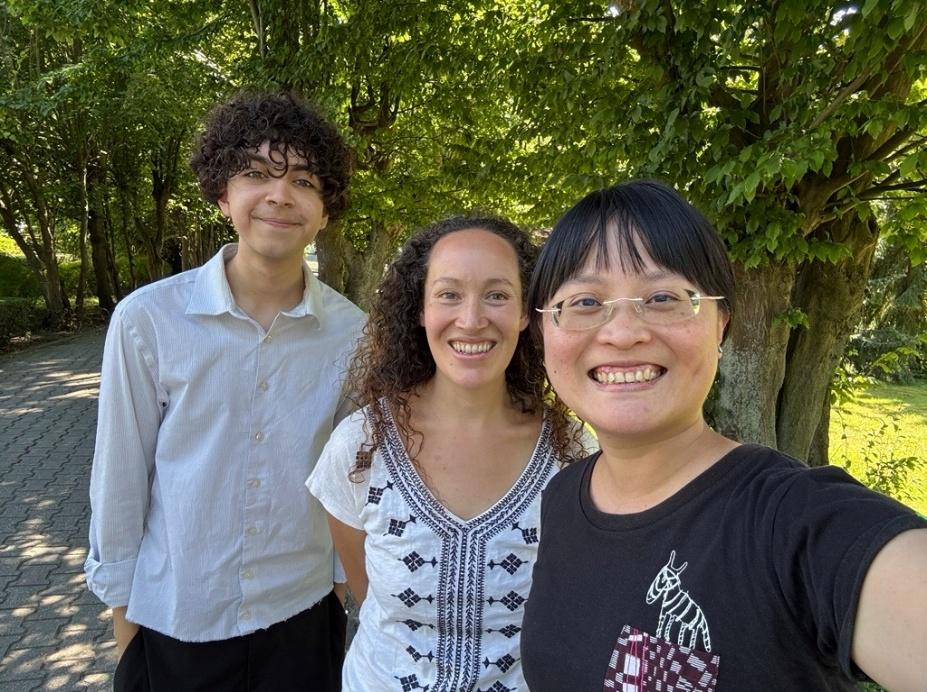
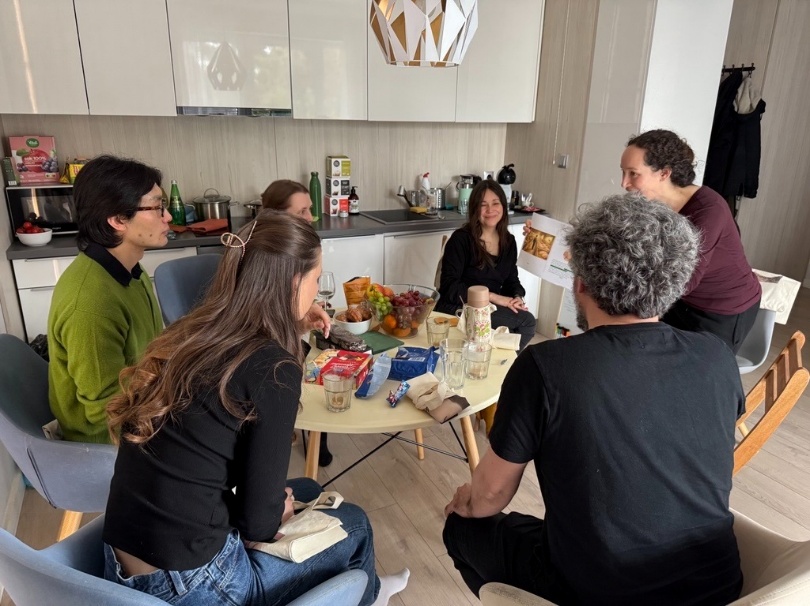
WG4 held a two-day in-person meeting in Warsaw, Poland, on the 26th and 27th of March 2026. The main aim of this meeting was to cross out or advance the pending work before the LIFT workshop and before the project ends. These include scheduling social media posts, creating poster templates for the LIFT workshop, advancing the children’s book and translation of positive animal welfare (PAW), as well as documenting WG4’s past activities for the deliverable.
During the meeting, some important decisions regarding the legacy of social media accounts and website maintenance have been made. All the articles on the LIFT website were also concentrated in one single document, ready to be attached into the WG4’s deliverable. Additionally, answers from subWG4.5’s survey regarding the translation of PAW were started to be analyzed at the meeting. Preview of the 16 languages received from the survey can now be viewed in the tab ‘Output in other languages’ on the LIFT website.
One of the highlights in this meeting was the invitation of an artist, Lena Pozdnyakova, who has participated in the illustration of poems written by David Fraser (which you can see in ‘Other Outputs’ on the LIFT website).
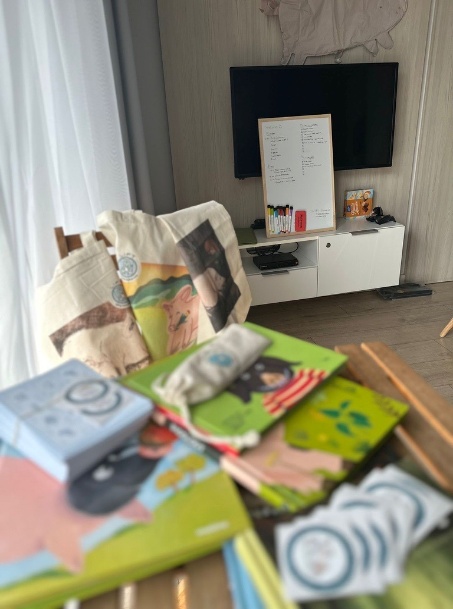
An initiative of the creation of a children’s book was launched, and the storyline was ready to be illustrated. The goal of the children’s book was to narrate and illustrate the current understanding of PAW to the younger generation. This was the very first meeting where the authors and the illustrator could meet in person and discuss in detail the style of the drawings. The authors and the illustrator were engaged in a close study of visual language, drawing on a curated selection of reference books to analyze illustration styles, compositional strategies, and the expressive qualities of line, color, and form. This process combined discussion with iterative sketching, exploring the morphology and personality of the main character alongside secondary and supporting roles. Attention was given not only to individual character design but also to relational dynamics and visual coherence across the cast. Secondary and supporting characters were also explored, with the ideation of their distinctive qualities and visual features contributing to the overall development and coherence of the book. Additional time was dedicated to conceptualizing the story’s environments, with Lena developing spatial contexts and atmospheric qualities that support the narrative. Through sketching key frames and experimenting with visual dramaturgy, the group worked to establish a sense of scene—considering perspective, rhythm, and sequencing to guide how the story unfolds visually across moments and transitions.
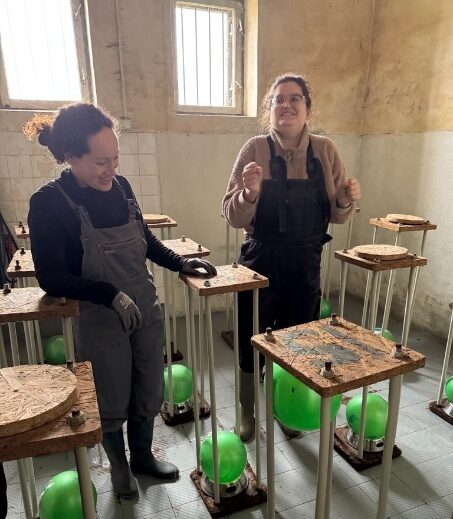
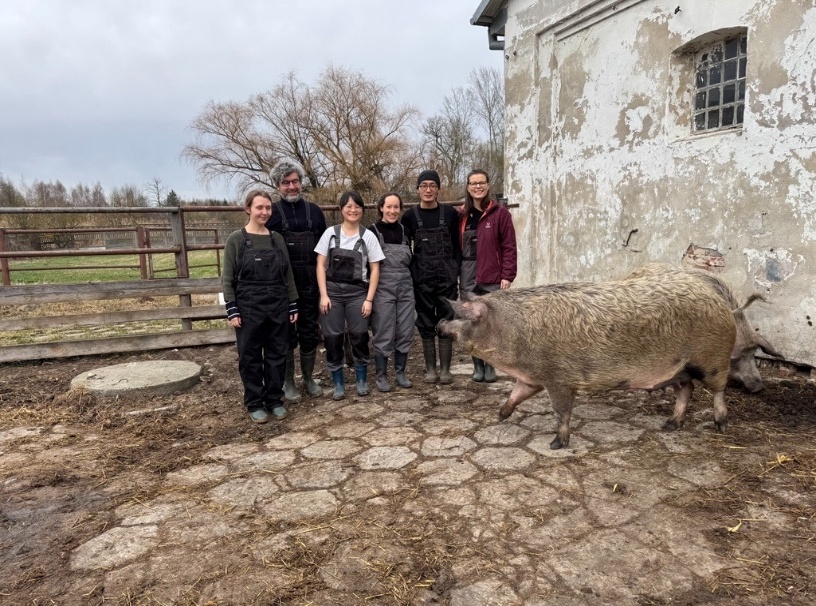
Visiting Irene’s city almost always includes visiting her lovely pigs at the pig research facility at the Institute of Genetics and Biotechnology of the Polish Academy of Sciences. 🙂 Her PhD students, Coralie Galvagnon and Mikolaj Zybala, enthusiastically introduced us to the memory test and equipment they had been conducting in the past year. The visit ended with a scratching session with Irene’s pigs, leaving both the pigs and the visitors happy!
Written by Lena Pozdnyakova and Heng-Lun Ko