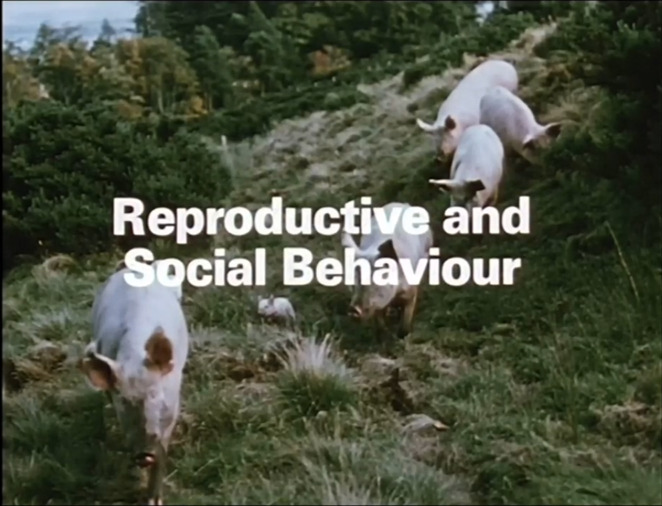
“…However, like other behavioural needs, these social requirements for a true pig life are not accommodated in modern housing conditions.” – Transcript from Edinburgh Pig Park Episode 2 Reproductive and Social Behaviour
Nearly 50 years after the Edinburgh Pig Park study, what aspects of modern pig farming have changed in response to our growing understanding of pig behaviour and welfare? This was the question that struck me as a younger-generation ethologist while editing the Edinburgh Pig Park documentary.
In the post-WWII period, Europe faced an urgent need to increase food production to feed a growing population and support rapidly booming economies. The intensification of livestock farming was, in many ways, an inevitable response. Yet as the negative consequences of intensive farming systems became increasingly apparent, applied ethologists began to place animal behaviour at the centre of efforts to understand and improve animal welfare.
In 1978, David Wood-Gush, Alex Stolba and their colleagues were among the pioneers in investigating the effects of intensive farming, or “factory farming” on animals. They established what would become the now-famous Edinburgh Pig Park. At the time, scientists were questioning whether domestication had altered animals’ behavioural needs and whether domestic animals had retained the ability and motivation to express behaviours similar to those of their wild ancestors. If domestication had changed these needs sufficiently, perhaps animals could adapt readily to intensive farming systems. Yet the behaviour and welfare of domestic pigs were still relatively poorly understood.
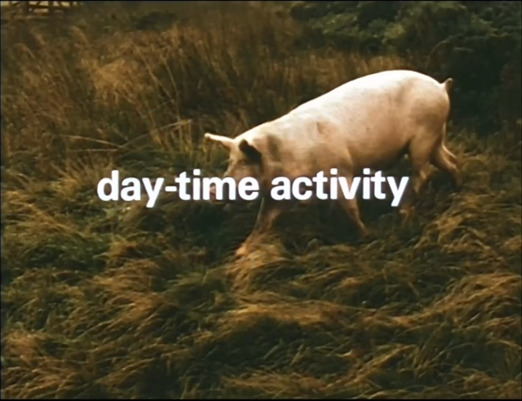
In the Edinburgh Pig Park study, domestic pigs that had previously been housed indoors were released into a semi-natural enclosure, where their behaviour could be observed with minimal human intervention. The results were striking. The pigs displayed a behavioural repertoire remarkably similar to that of wild boars. Their activity budgets, social, exploratory and reproductive behaviours, and interactions with their environment revealed complex behavioural sequences, contrast to when housed indoors.
The findings were published in a series of papers that still remain widely cited today and are regarded as landmark research in animal behaviour and welfare science. Many of the behavioural themes documented in the study, from ear and tail postures, social learning, preferred social partners and to agency, remain highly relevant to contemporary discussions of positive animal welfare. As one transcript from Episode 3 puts it, “…the sows entirely lose control over the environment.” These observations highlight how the Edinburgh Pig Park research continues to inspire and illuminate the development of applied ethology and animal welfare science and how it links to aspects of positive animal welfare, such as agency.
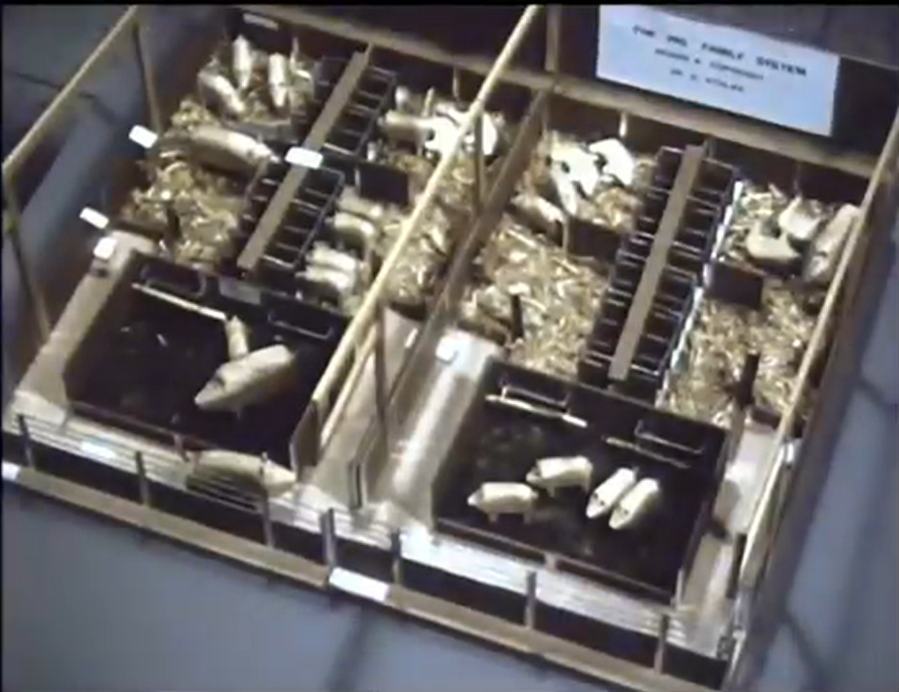
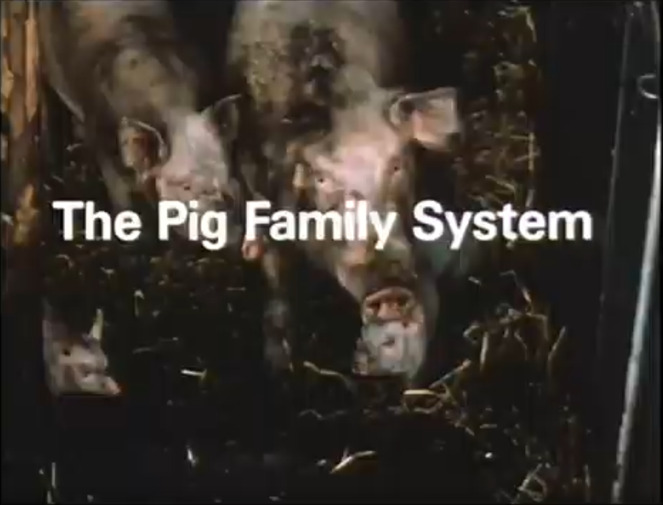
The work also had practical implications. Drawing on their observations of pigs in the Edinburgh Pig Park, David Wood-Gush, Alex Stolba and their colleagues went on to develop the Pig Family System, which sought to strike a balance between animal production and economic viability on the one hand, and humane treatment and animal welfare on the other. Although the system was not ultimately adopted commercially on a large scale, it demonstrated that production and welfare did not necessarily have to be opposing goals. By incorporating evidence-based knowledge of pigs’ behavioural needs into housing design, the system showed that it was possible to bring animal welfare and production closer together.
Today, the development of animal welfare science continues to stand on the shoulders of Giants such as those involved in the Edinburgh Pig Park study. Their work reminds us that understanding what animals are motivated to do, and providing them with opportunities to express important behaviours, is fundamental to recognizing positive animal welfare and creating better farming systems.
By making this three-part documentary publicly available on the LIFT YouTube channel, we hope that Edinburgh Pig Park will be as inspiring and thought-provoking for you as it has been for us. Nearly five decades on, the question still remains relevant: what does a good life look like for a pig, and how can farming systems better accommodate the behavioural needs of the animals they house?
Playlist: https://www.youtube.com/playlist?list=PLLJsuWa6sQWahxgo9MC-Uc1t0N4YN3bgK
[EN]
Episode 1: https://youtu.be/cxaGzy3u4PY
Episode 2: https://youtu.be/J_IM5ppiajg
Episode 3: https://youtu.be/TN00UWxDH78