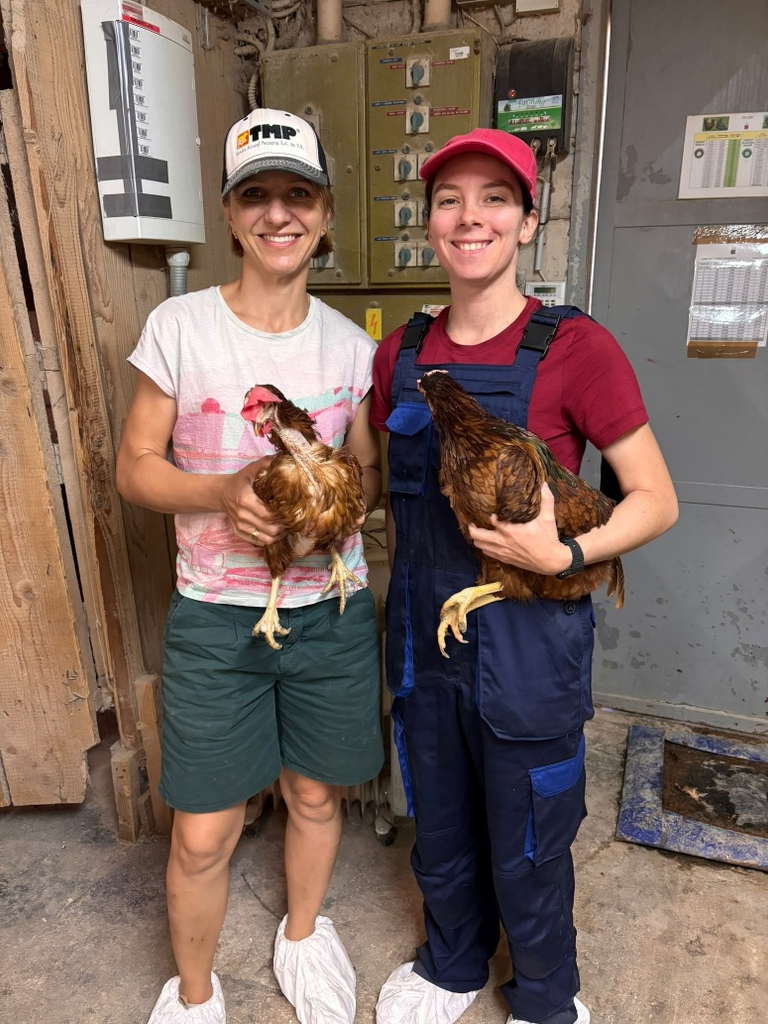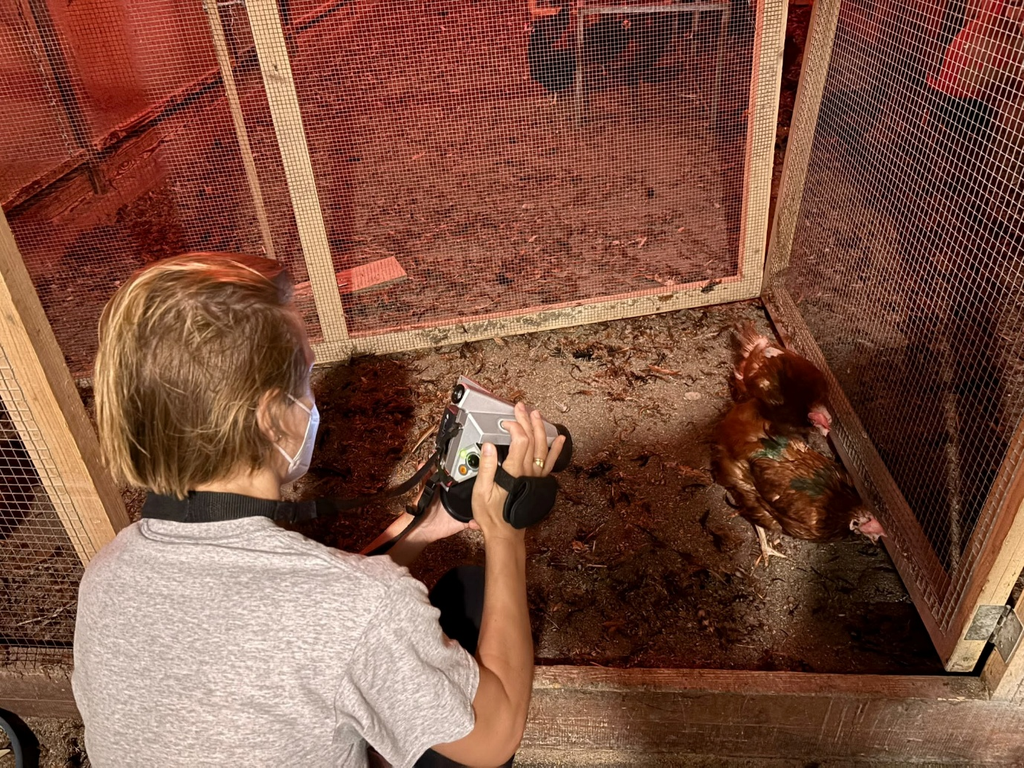
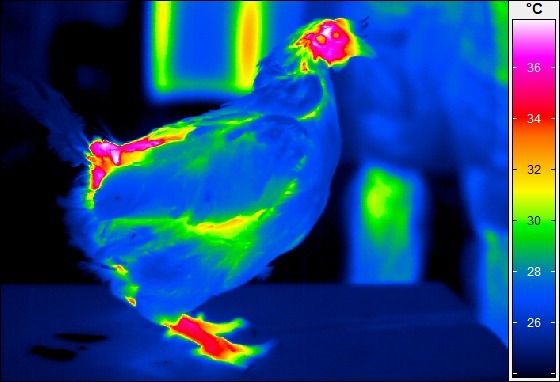
From 1 to 15 September 2026, Dr Maria Soroko-Dubrovina from Wrocław University of Environmental and Life Sciences, Poland, carried out a Short-Term Scientific Mission (STSM) in Ljubljana, Slovenia, within the LIFT CA21124 COST Action. Hosted by Prof. Manja Zupan Šemrov and her team, the STSM focused on exploring the potential of infrared thermography as a non-invasive tool for assessing physiological responses associated with different welfare-related situations in laying hens.
The study was conducted under commercial farm conditions and consisted of two complementary parts. In the first part, 60 laying hens from three different breeds with white, brown and black plumage were assessed. Feather condition was evaluated and whole-body thermographic images were collected from each hen. This part of the study will help explore how feather condition and plumage colour may influence body surface temperature and its distribution across different body regions.
The second part involved 21 individually identified brown laying hens. The same hens were repeatedly assessed in three different experimental situations: a neutral control situation, a putatively positive situation based on scatter feeding, and an aversive situation based on upright handling. Thermographic images of the head were collected together with behavioural observations and individual welfare-related assessments. This approach will allow us to investigate whether different welfare-related situations are associated with distinct thermal response patterns and whether infrared thermography could contribute to non-invasive welfare assessment in poultry.
An important part of the STSM was the exchange of expertise between the visiting researcher and the host team. Maria contributed her experience in infrared thermography, while the Ljubljana team provided expertise in poultry behaviour, welfare assessment and research under commercial farm conditions. Working together also allowed the experimental protocol to be refined and optimised during the study.
The STSM resulted in a unique pilot dataset that is now being jointly analysed. The collaboration will continue through the preparation of scientific publications and presentation of the findings at international conferences. The experience gained during the STSM also provides a basis for further collaborative research on the use of infrared thermography as a non-invasive method for studying welfare-related responses in poultry.